Almost everything built off the sewer lines in Currituck County depends on a septic system, and almost every lot here presents the same challenge: flat ground, sandy soil, and a water table that comes up close to the surface for part of the year. That combination decides what system your property can legally take long before anyone picks up a shovel. Albetuck Land Development handles septic system installation across Jarvisburg, Grandy, Powells Point, and the surrounding communities — from the soil evaluation and permit file through tank set, drainfield, backfill, and final inspection. Clay Newbern’s father installed septic systems on this same ground for decades, and the family has been reading these soils since long before the current rules were written. Call (252) 435-4321 for a free estimate.
What Septic System Installation Actually Involves
A septic system is an on-site wastewater treatment system: a buried tank that separates solids and begins treatment, and a dispersal field that releases the clarified effluent into the soil, where the soil finishes the job. North Carolina does not permit systems on a perc test — it uses a soil morphology evaluation, in which a registered environmental health specialist or licensed soil scientist digs and reads the soil profile for texture, structure, drainage, and depth to the seasonal high water table, then assigns it to Soil Group I through IV. That reading determines everything downstream: how much drainfield area you need, how deep the trenches can go, and whether a simple gravity system will work or whether the site needs a pump, low-pressure pipe distribution, or imported fill to raise the field. The installation itself runs in sequence. We excavate and set the tank on a level, compacted bed, install risers and an effluent filter, plumb the building sewer line at the correct fall, set the distribution box or pump tank, then cut the dispersal trenches to the depth and length the permit specifies — using gravel or gravelless chamber media depending on the design. Trenches are laid level, on contour, and inspected before they are covered. After the health department signs off, we backfill, crown the ground so surface water sheds away from the field, and stabilize the disturbed area. What you get is a system sized to your house, sited where the soil can actually treat what you send it, and documented on a permit that will follow the property at resale.
Our Septic Installation Process
Step 1 — Site visit and soil evaluation. We walk the lot with you, look at where the house, driveway, and well are going, and identify the areas most likely to evaluate favorably — including the repair area the rules require you to reserve for a future replacement field. In Currituck County, environmental health services are administered through Albemarle Regional Health Services rather than the county itself, and their specialist performs the official evaluation. Getting the layout right before that visit is the single biggest thing that keeps a lot from being classified unsuitable.
Step 2 — Improvement Permit and Construction Authorization. North Carolina uses a two-permit sequence. The Improvement Permit confirms the site has suitable soil and space for a specific system type. The Construction Authorization, issued afterward, spells out the actual design — tank size, trench length, media, and layout — and must be in hand before installation begins. The Construction Authorization is what unlocks your building permit, so on a new home the septic file is usually the critical path, not the framing schedule. We prepare the paperwork and coordinate the site plan so it moves.
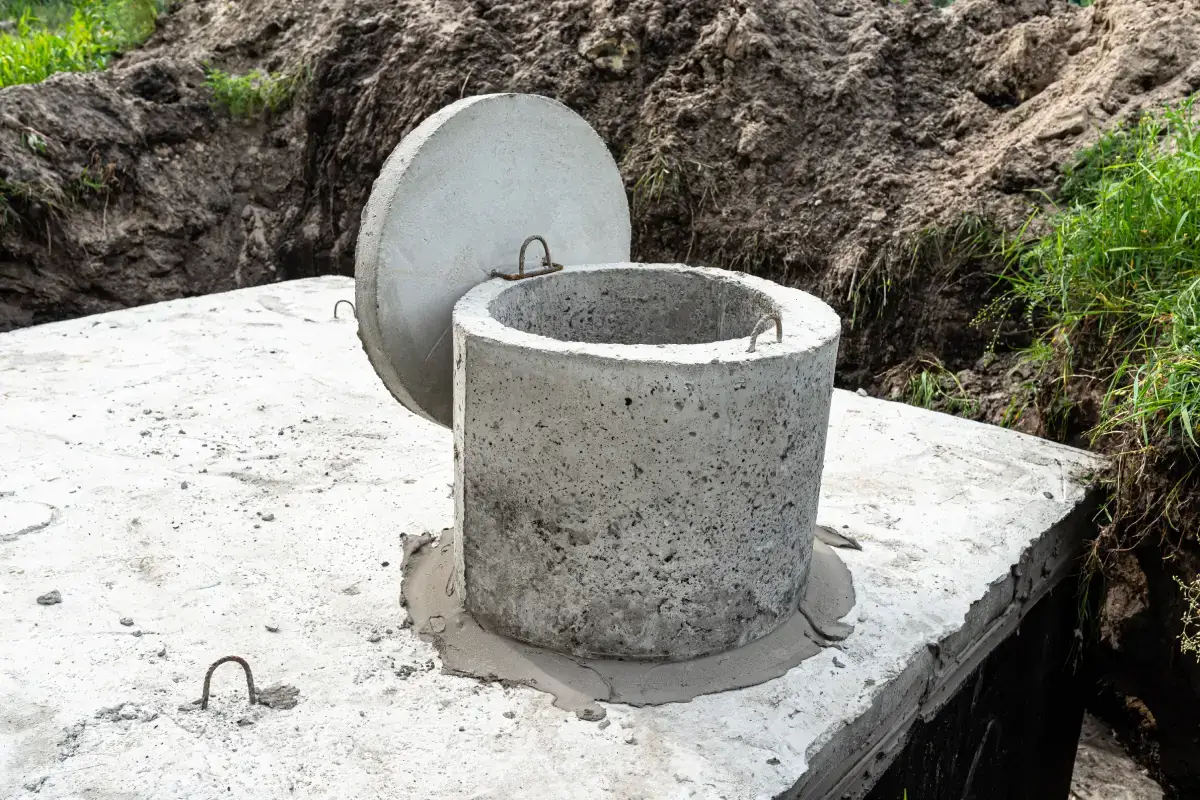
Step 3 — Excavate and set the tank. Our crew excavates to grade, beds and levels the tank, and sets it with an excavator. We install risers to grade so the tank can actually be pumped and inspected later without digging up the yard, fit an effluent filter on the outlet, and run the building sewer line at proper fall with the correct pipe and bedding. On high water table lots we take extra care with bedding and buoyancy, because a tank set carelessly in saturated coastal soil can shift.
Step 4 — Install the dispersal field to the permitted design. Trenches are cut to the depth, width, and length the Construction Authorization specifies, kept level along their length, and laid out on contour so effluent distributes evenly instead of pooling at one end. We install the specified media — conventional gravel, or gravelless chamber systems that perform well in the sandy and variably wet soils common here — set the distribution box or pump and controls, and maintain the required vertical separation between the trench bottom and the seasonal high water table. That separation is the entire reason a system treats wastewater instead of releasing it, and it is what coastal soil design is really about.
Step 5 — Inspection, backfill, and handoff. The system is inspected by the health department before anything is covered. Once it passes, we backfill carefully so trenches are not compacted or collapsed, grade the surface to shed water away from the field, stabilize the ground, and hand you the permit documentation. You finish with a system that is legal, inspected, recorded, and sized for the house you are building — and with clear instructions on what to keep off the drainfield so it lasts the decades it should.
Serving Jarvisburg and the Surrounding Area
Albetuck Land Development installs septic systems throughout Currituck County and the northern Outer Banks — Jarvisburg, Grandy, Poplar Branch, Aydlett, Powells Point, Harbinger, Point Harbor, Coinjock, Barco, Maple, Currituck, Shawboro, Moyock, and Knotts Island — as well as Southern Shores, Duck, Kitty Hawk, Kill Devil Hills, Nags Head, Corolla, Manteo, Columbia, Elizabeth City, and the Hatteras Island villages.
Soil conditions across that footprint vary more than the flat landscape suggests, and they change what your system has to be. Mainland ground near Currituck Sound is flat with a seasonal high water table that can sit within a few feet of the surface, which limits how deep trenches can go and often means a raised or fill system to gain the required separation. Barrier island lots from Duck down to Hatteras are Group I sand that drains so fast the effluent can move through before it is properly treated, which drives its own design requirements. And in the true tidal marsh margins, the soils are organic mucky peat classified as very poorly drained — ground that will not support a conventional system at all. Knowing which of those you are standing on before you buy or design is worth more than any other advice on this page.
Why Currituck County Homeowners Choose Albetuck
Septic work in this family goes back a generation. Clay’s father ran F&H, which installed septic systems, did sitework, and cleared land across this county for years, and Clay has been on those jobs since he was a boy. That history matters on a coastal lot, because the difference between a system that passes and a system that never gets permitted is usually a judgment call about where to put it — made before the evaluator ever arrives. Learn more about our background and our crew.
The rules changed substantially in recent years. North Carolina replaced its 1990-era septic regulations with 15A NCAC 18E, effective January 2024, which updated system types, design criteria, and separation requirements, and included specific provisions for the state’s 41 designated coastal counties — Currituck among them. The statewide program is administered by the N.C. Division of Public Health On-Site Water Protection Branch and enforced locally, which for this county means Albemarle Regional Health Services. We work inside that process every week and know how the local office wants things submitted.
Because we also do the clearing, the grading, and the hauling, a septic job here does not need three contractors coordinating around each other. One crew clears the site, sets the system, brings in fill if the design requires it, and grades the lot.