Ordering stone or fill sounds simple until the load shows up. Wrong material for the job, dumped in one pile at the end of the drive, and short of what the area actually needed — it happens constantly, and it is expensive to fix. Albetuck Land Development handles gravel delivery, sand, fill dirt, topsoil, and rock hauling across Jarvisburg, Grandy, Powells Point, and the rest of Currituck County, and we spread what we bring rather than leaving it in a heap. Because we also grade and build driveways, we can tell you what material your soft, sandy, flat Currituck subgrade actually needs before you buy tonnage you will end up losing into the ground. Call (252) 435-4321 to price a load.
What Material Hauling and Delivery Actually Involves
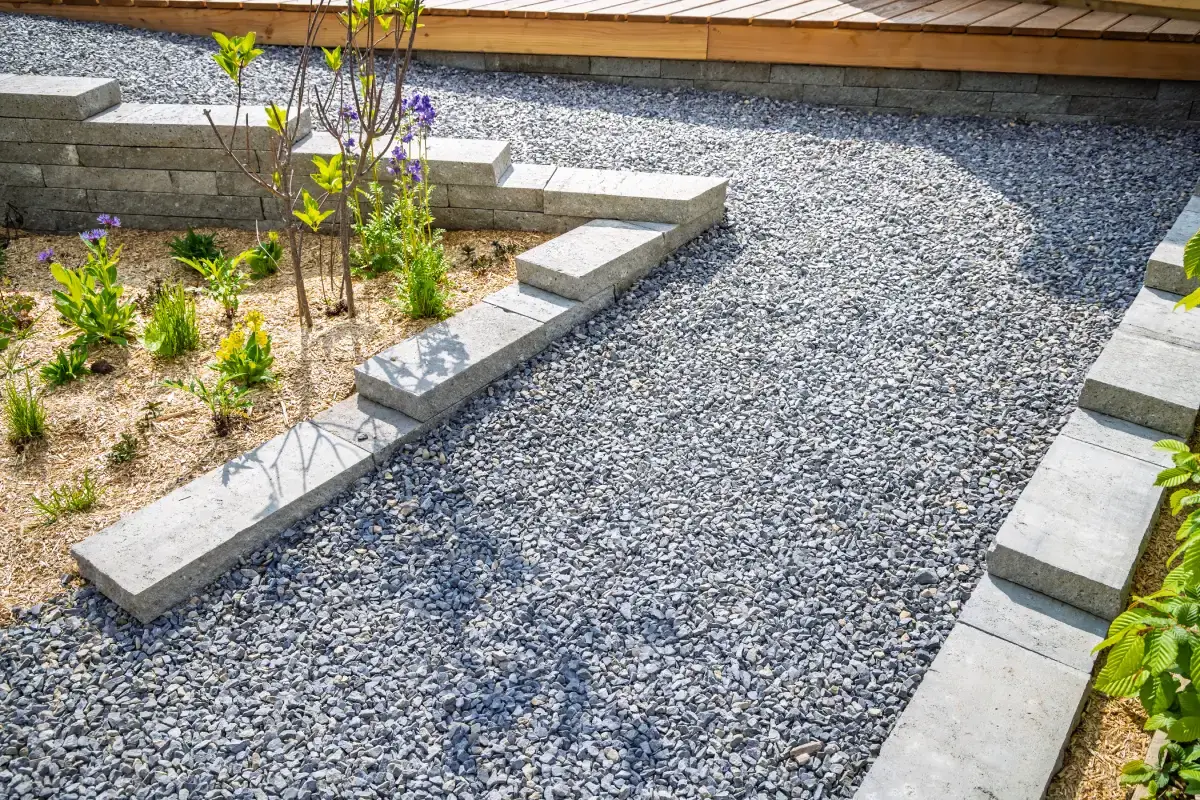
Material hauling is the sourcing, transport, placement, and often the spreading of bulk aggregate and soil — and the part that determines whether it works is material selection. Crusher run, sometimes called ABC, is a mix of crushed stone and fines that compacts into a hard, bound surface, which makes it the standard base for driveways and pads. Clean stone such as #57 does not bind but drains freely, which makes it right for drainage applications, pipe bedding, and areas that stay wet. Larger ballast and rip-rap stone stabilizes soft subgrade and holds shorelines and ditch banks. Washed sand and fill sand build elevation and bed pipe and septic tanks. Fill dirt raises grade under structures; screened topsoil finishes lawns and beds. Delivery is by dump truck sized to the load and the access — bigger trucks cost less per ton but cannot get everywhere, particularly on beach lanes and soft farm roads. On site, the choice is dump-and-go or placed and spread, and on anything larger than a small area, spreading with a skid steer or box blade is what turns a pile of stone into an actual surface. For a driveway on soft ground, the sequence matters: geotextile fabric over the subgrade to stop stone from sinking into sand and mud, a coarse base layer, then crusher run on top, graded with a crown so water runs off the sides instead of standing in the wheel tracks. Done that way, a gravel drive here lasts years instead of disappearing by the second wet season.
Our Material Delivery Process
Step 1 — Find out what the material is actually for. The first question we ask is what you are trying to accomplish, not how many tons you want. A driveway, a drainage trench, a shed pad, a low spot in a yard, and a septic backfill all call for different material, and the wrong choice looks fine on delivery day and fails within a season. If it makes sense, we look at the site first — especially on driveway work, where the subgrade decides everything.
Step 2 — Calculate the quantity properly. We measure the area, set the compacted depth the application needs, and convert to tons rather than guessing by the truckload. Aggregate is sold by weight but placed by volume, and the conversion is not intuitive, which is why so many homeowners order short. We give you the number for the job and tell you plainly if a marginal extra amount would save you a second delivery fee.
Step 3 — Match the truck to the access. We size the delivery to what your site can take. Open mainland properties in Grandy or Barco will take a large truck straight to the work area. Tight lots in Kitty Hawk, sandy lanes in Corolla, or a soft farm road in March will not, and forcing it means a stuck truck, torn-up ground, and an unhappy neighbor. Getting this right is unglamorous and it is exactly where most delivery problems start.
Step 4 — Place, spread, and grade it. We put material where it is going rather than at the closest point the truck can reach, and spread it with a skid steer or box blade to the depth specified. On driveways and pads we grade with a crown or slope so water sheds, and compact where the application calls for it. Loose stone dumped and raked by hand never achieves the density that makes a surface hold, and the difference shows up the first time a loaded vehicle drives on it.
Serving Jarvisburg and the Surrounding Area
Albetuck Land Development hauls material throughout Currituck County from our base on Caratoke Highway in Jarvisburg — Grandy, Poplar Branch, Aydlett, Waterlily, Powells Point, Harbinger, Point Harbor, Coinjock, Barco, Maple, Currituck, Shawboro, and Moyock — and across to Southern Shores, Duck, Kitty Hawk, Kill Devil Hills, Nags Head, and Corolla. We also deliver to Elizabeth City, Manteo, Columbia, and the Hatteras Island villages along NC-12.
Ground conditions here are hard on aggregate, which is why material choice matters more locally than it would inland. Mainland lots sit on flat ground with a seasonal high water table, so stone placed directly on a saturated subgrade migrates down into it and simply disappears — the reason we push geotextile fabric on almost every driveway job on that side of the county. Barrier island properties are the opposite: deep, loose, fast-draining sand that gives stone nothing to key into and needs a properly built base rather than a surface dressing. And anywhere near the sound or the ocean, storm-driven water will find and exploit any driveway that was not crowned to drain. We size and sequence material for the ground it is going on.
Why Customers Here Buy Their Material From Albetuck
Most gravel delivery is a transaction: a truck arrives, tips a load, and leaves. Ours is usually part of a job we are also doing the dirt work for, which means the material gets specified by the same people who will have to live with whether it works. Clay Newbern has been building driveways, pads, and lanes on this ground since childhood, on his father’s crews before Albetuck existed. Learn more about our family and our crew.
We also handle the parts of a material job that a delivery-only outfit will not touch — excavating and preparing the subgrade first, installing culverts and fabric, spreading and grading the material, and stabilizing disturbed areas afterward. Where a project disturbs enough ground to trigger the state’s erosion and sediment control requirements, including the mandatory groundcover deadlines after grading, we plan for that rather than leaving you exposed to it. If a driveway ties into a state-maintained road, we will also flag the driveway permit that Currituck County and NCDOT requirements may apply to your access point.
We are a small local outfit — six to seven people, based ten minutes from most of the work, quoting free estimates and working 8 to 5 Monday through Saturday.