There is almost no natural fall in Lower Currituck. From the fields along Caratoke Highway out to the edge of Currituck Sound, the ground is flat enough that water does not leave a site unless someone gives it somewhere to go. That single fact is behind most of the site work problems we get called about — soggy yards, driveways that pond, house pads that settle, and new construction that cannot pass a final grade inspection. Albetuck Land Development works as an excavation contractor across Jarvisburg, Grandy, Powells Point, and the surrounding communities, handling grading, house and building pads, drainage, ditching, utility trenching, and full site preparation. Call (252) 435-4321 for a free estimate on your project.
What Site Work and Excavation Actually Involves
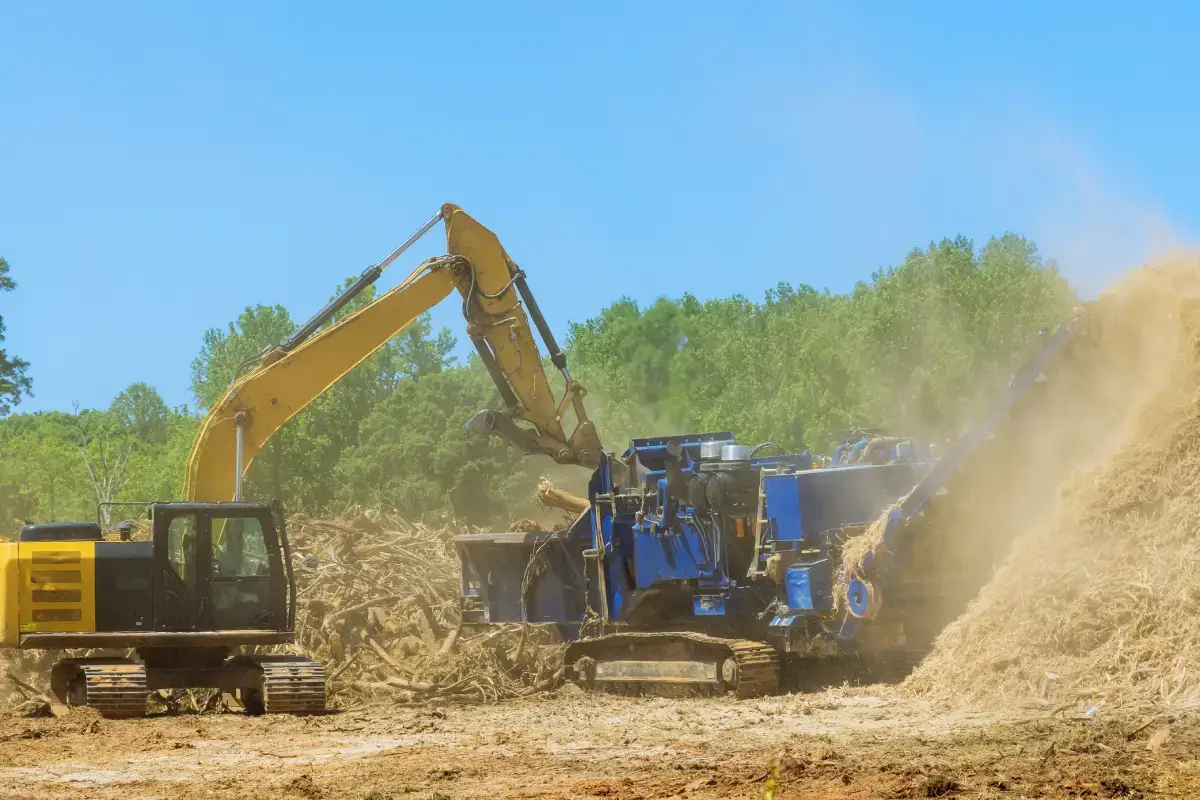
Site work is everything that has to happen to raw or existing ground before a building, driveway, or system can go on it — and everything that has to happen afterward to make water behave. The sequence starts with layout: establishing existing elevations, staking the building footprint and driveway, and identifying where water currently goes and where it needs to go instead. Before any dirt moves, we file an NC811 locate request and, on jobs disturbing more than an acre, confirm the erosion and sediment control plan is approved and the perimeter measures are installed. Then the earthwork begins. Excavators strip topsoil and organic material and move it to fill areas. House and building pads are built up in controlled lifts and compacted, not pushed into a mound — a pad dumped in one pass settles unevenly under a slab, and no amount of concrete fixes that later. Dozers, box blades, and laser or grade-controlled equipment bring the surface true. Drainage is cut in as swales, ditches, or piped storm lines tied to the roadside ditch network that drains this county. Utility work runs in the same phase: trenching for water lines, electrical conduit, and gas, bedded and backfilled to specification. The job closes with final grade, positive slope away from structures, and stabilization — permanent groundcover has to be established within a defined window under state rules, not whenever the seed happens to get spread. The site you get back drains, compacts, and passes inspection.
Our Site Work Process
Step 1 — Walk the site and read the water. Before we quote anything we walk the property, note existing grades, find the low spots, and trace where water currently runs and where it stalls. On flat coastal ground this is the whole ballgame: a pad at the right elevation and a swale to the right ditch keeps a lot dry for thirty years, and getting either wrong costs the owner every wet season. We also check access, overhead lines, and whether the ground will carry equipment at the time of year you want the work done.
Step 2 — Locates, permits, and erosion control first. We submit the NC811 locate request and wait the full notice period required by state law before breaking ground, so buried power, gas, water, and communications lines are marked. Where more than one acre will be disturbed, an approved erosion and sediment control plan has to be in hand before work starts, and we install silt fence, a stabilized construction entrance, and inlet protection as the first work on site rather than as an afterthought once an inspector shows up.
Step 3 — Strip, cut, fill, and compact. Topsoil and organic material come off the building area and get stockpiled for reuse rather than hauled off and repurchased. We cut and fill to the design elevations, building pads up in lifts and compacting each one so the pad carries load evenly. If the site needs material we do not have on it, we haul in fill sand or select fill ourselves. Under-building and under-slab areas are proof-checked before anything gets poured on them.
Step 4 — Drainage and underground utilities. We cut swales and ditches, install pipe and culverts where the design calls for them, and tie the site into the drainage that already serves your road. Utility trenches for water service, electrical conduit, and gas are dug to depth, bedded properly, and backfilled in lifts so the trench line does not become a settled scar across the yard a year later. On flat ground with a high water table, sequencing this correctly keeps a trench from filling with water faster than it can be worked.
Step 5 — Final grade, stabilize, and clean up. We bring the site to finish grade with positive slope carrying water away from the structure, respread stockpiled topsoil, stabilize disturbed areas, and clean up the working area and the road frontage. State rules require groundcover to be established within a defined window after grading is complete, and we plan for it rather than leaving it for the owner to sort out. You end up with a site that drains, holds its shape, and does not generate a punch list.
Serving Jarvisburg and the Surrounding Area
Albetuck Land Development is based in Jarvisburg on Caratoke Highway, the same US-158 corridor most of this county’s construction traffic runs on. Our excavation and grading crews work the Currituck mainland from Point Harbor, Harbinger, and Powells Point through Grandy, Poplar Branch, Aydlett, and Coinjock up to Barco, Maple, Currituck, Shawboro, and Moyock — and across the Wright Memorial Bridge into Southern Shores, Duck, Kitty Hawk, Kill Devil Hills, Nags Head, and Corolla. We also serve Elizabeth City, Manteo, Columbia, and the Hatteras Island villages along NC-12.
Working dirt here means working with two constants: no elevation and a lot of water. Mainland lots sit on flat former farm ground where the seasonal water table can rise within a couple of feet of the surface, so pads have to be built up rather than cut down and drainage has to be engineered rather than assumed. Barrier island sites are loose sand that will not hold an unstabilized slope and needs compaction discipline under any structure. Both conditions punish shortcuts, and both are what our equipment and our crews are set up for.
Why Builders and Property Owners Here Choose Albetuck
Clay Newbern has been around this work since he was five years old, on his father’s crews at F&H — a company that did septic, sitework, and land clearing across Currituck for years. That means our judgment about this ground comes from decades of watching what holds and what fails on it, not from a spec sheet. We run a crew of six to seven, so the person who priced your job is the person on site. Learn more about the team before you decide who to call.
We take the regulatory side seriously because on site work it is where the money leaks. North Carolina law requires excavators to notify NC811 and wait three full working days for utilities to be located before digging, and marks stay valid for a set window after that. Separately, any land-disturbing activity uncovering more than one acre needs an approved erosion and sediment control plan filed at least 30 days ahead of work, with fees assessed per acre of disturbance. A crew that treats either as optional is a crew that stops your job, and we do not work that way.
We handle residential lots, farm and agricultural work, and increasingly commercial site prep, and we can take a project from raw wooded acreage all the way to a finished, stabilized building site without subcontracting the middle of it out.